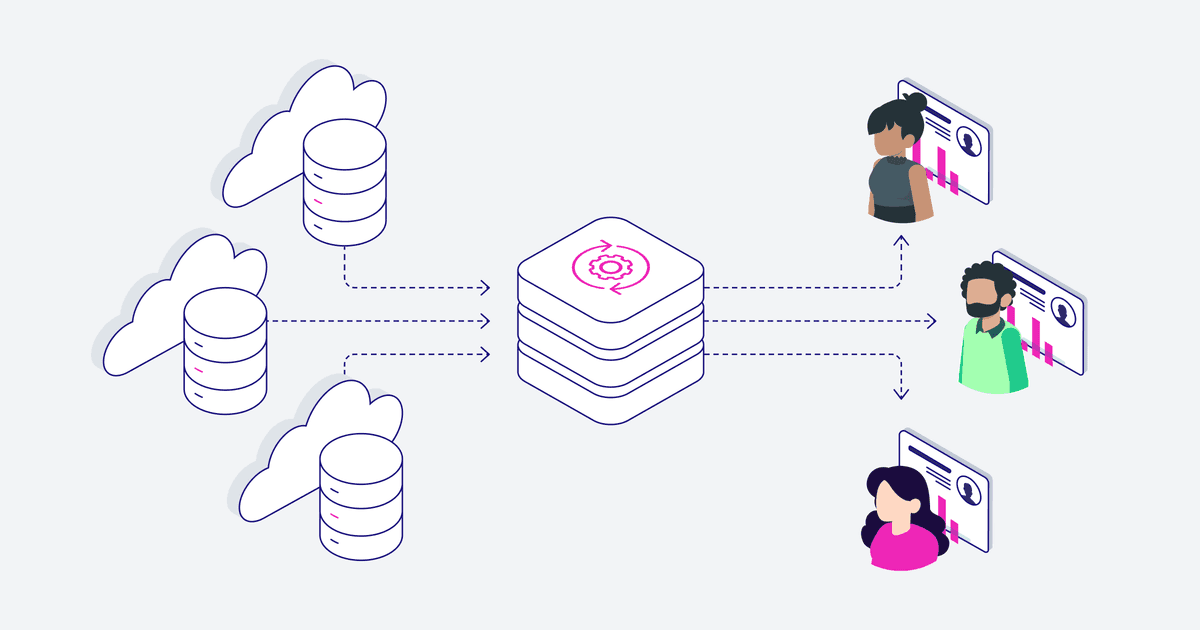
Modern software platforms rarely serve just one organization. Most applications today are built as SaaS products that support many customers simultaneously. Each customer expects their data to remain private, their configurations to remain isolated, and the system to scale reliably as their usage grows.
This is where multitenancy becomes a fundamental architectural concept.
Multitenancy allows a single application instance to serve multiple organizations, called tenants, while maintaining strict data isolation between them. Instead of deploying separate infrastructure for every client, engineers can build one scalable platform that securely serves many customers.
In this blog, we explore what multitenancy is, why modern systems rely on it, and the architectural approaches commonly used to implement it.
The Challenge: Serving Many Customers with One System
Building a system for multiple customers introduces a key challenge. Every tenant expects their data to be completely private, even though they are using the same application.
For example, imagine a SaaS CRM platform used by three companies:
- Company A: manages its own customer records and sales pipelines
- Company B: stores completely different customers and transactions
- Company C: uses the same product but with its own users and data
Even though these companies share the same application, their data must never mix.
Without a multitenant design, developers would need to deploy a completely separate application for every customer. This quickly becomes expensive and difficult to maintain.
Multitenancy solves this problem by allowing a single system to serve many tenants while maintaining logical separation.
Why Multitenancy Matters
Modern SaaS products rely heavily on multitenant architectures because they provide strong operational and scalability benefits.
1. Efficient Infrastructure Usage
Instead of provisioning separate servers for every customer, multiple tenants share the same infrastructure.
This significantly reduces:
- cloud infrastructure cost
- operational overhead
- system maintenance complexity
A single deployment can support thousands of organizations.
2. Simplified Updates and Maintenance
When an application runs as a multitenant system, developers only maintain one deployment.
This means:
- new features can be rolled out faster
- security patches can be applied instantly
- monitoring and logging become simpler
Maintaining hundreds of separate deployments is no longer necessary.
3. Scalability
Multitenant systems can onboard new customers quickly without provisioning entirely new environments.
Platforms such as Notion, Slack, and Salesforce rely heavily on multitenancy to support millions of users across thousands of organizations.
Multitenancy Architecture Approaches
There is no single way to implement multitenancy. The architecture depends on security requirements, scalability needs, and system complexity.
The most common approaches differ primarily in how tenant data is stored.
1. Shared Database with Shared Schema
This is the simplest and most cost efficient approach.
All tenants share the same database tables. Each row contains a tenant_id column that identifies which tenant the data belongs to.
Example table structure:
| id | tenant_id | name | |
|---|---|---|---|
| 1 | companyA | Alice | alice@companyA.com |
| 2 | companyB | Bob | bob@companyB.com |
Every query must include a tenant filter.
SELECT * FROM users WHERE tenant_id = 'companyA';Advantages:
- very cost efficient
- simple infrastructure
- easy to scale horizontally
Challenges:
- application logic must always enforce tenant filtering
- higher risk of accidental data exposure if filters are missing
2. Shared Database with Separate Schemas
In this architecture, tenants share the same database server but each tenant has its own schema.
Example structure:
database
 ├── tenant_a_schema
 │    ├── users
 │    └── orders
 ├── tenant_b_schema
 │    ├── users
 │    └── orders
Advantages:
- stronger data separation
- easier tenant level backup
Challenges:
- schema migrations become more complex
- managing hundreds of schemas can introduce operational overhead
3. Separate Database per Tenant
In this approach, every tenant gets a dedicated database instance.
Tenant A → Database A
Tenant B → Database B
Tenant C → Database C
Advantages:
- maximum isolation between tenants
- easier compliance with strict security requirements
- flexible customization for enterprise clients
Challenges:
- higher infrastructure cost
- more operational complexity
Large enterprise SaaS platforms often use this model for high paying customers.
Implementing Tenant Awareness in Applications
For a multitenant system to work correctly, every request must carry tenant context so that the backend knows which tenant's data should be accessed.
This is often done through:
- request headers
- authentication tokens
- subdomains
Example API request:
GET /customers
Header:
X-Tenant-ID: companyA
Backend middleware extracts the tenant identifier before querying the database.
def get_customers(request):
    tenant_id = request.headers["X-Tenant-ID"]

    customers = db.query(
        "SELECT * FROM customers WHERE tenant_id = %s",
        tenant_id
    )

    return customers
This ensures the system only returns data belonging to the requesting tenant.
Multitenancy in Modern AI Platforms
Multitenancy is also becoming increasingly important in AI platforms and machine learning systems.
Many AI services allow multiple organizations to upload data and run models on shared infrastructure. The platform must ensure:
- datasets remain isolated between tenants
- inference results are only accessible to the correct tenant
- model usage is tracked per organization
For example, an AI document analysis platform may allow many companies to upload files and run NLP pipelines. Even though the system runs one shared model service, the data pipelines must remain tenant aware.
Designing Multitenant Systems Carefully
While multitenancy provides major scalability advantages, it also introduces new engineering challenges.
Developers must carefully design:
- data isolation mechanisms
- authentication and authorization systems
- tenant aware logging and monitoring
- resource limits to prevent one tenant from impacting others
A poorly designed multitenant system can lead to performance issues or security vulnerabilities.
Conclusion
Multitenancy is a core architectural principle behind most modern SaaS platforms. It allows a single application to securely serve many organizations while maintaining strict data separation.
By sharing infrastructure and application logic across tenants, companies can reduce operational costs, deploy updates faster, and scale their platforms to support thousands of customers.
As cloud computing and AI platforms continue to grow, multitenant architecture will remain a key design pattern for building scalable and efficient software systems.